In 1956, John F. Kennedy was the junior senator from Massachusetts. It is well known that he had an ambitious father, Joe Kennedy, who had set his goal on elevating one of his four sons to high office. His oldest, Joe Jr., had been killed in WW2, and so, the next oldest, John, was being pushed forward. John had been elected to the House of Representatives in 1946 and then to the senate in 1952. The path forward was clear, but John needed more gravitas to be considered presidential material. And so, someone, perhaps old Joe himself, came up with the idea for a book about little-known senatorial heroes who had made hard decisions, sometime against the will of their own political party.
From that idea came the book Profiles in Courage. It was published in 1956 and Kennedy was credited as the author, although later, it was admitted that Kennedy’s friend, Ted Sorenson, did most of the writing. Nevertheless, it won a Pulitzer Prize and did, in fact, add prestige and gravitas to the young senator’s profile, and he became the president in 1960.
After his assassination in 1963, the year I was born, the chapters of the book were made into several TV episodes, and that is how, one day in some year I can’t perfectly recall, I came to see one of those movies when it was screened in my class. It was probably around 1973, when I was in 5th grade at Ensley Elementary School. The teachers sometimes showed us films, and on this particular day, they showed us one of the films from the Profiles in Courage series.
I remember this film vividly and now know it was Episode 19, and it was about Kansas Senator Edmond Ross, the man credited with keeping President Andrew Johnson from being impeached. His vote saved Lincoln’s vice president from being forced out of office, thus creating further chaos in a nation just three years out of a bloody Civil War. The motivation for showing this film as opposed to the 25 others available was probably that in 1973, impeachment hearings were being televised all day long. The president at that time was Richard Nixon, the man Kennedy had defeated for the high office in 1960.
Inspired by the memory of that screening so long ago, and aware that another impeachment is brewing in the US Congress, here is a short history of impeachments.
Andrew Johnson’s Impeachment
Abraham Lincoln was elected in 1860 and his election was the spark that set off the long simmering Civil War. The Southern states began to drop out of the union weeks after Lincoln’s less than a majority vote victory. By April of 1861, 11 states had seceded from the Union and in South Carolina, Confederate troops fired on the federal fort in the Charleston Harbor, called Fort Sumpter.
The senator from Tennessee at the beginning of the war was Andrew Johnson, and he implored his fellow Southern Democrat senators not to go for secession. He tried to convince the senator from Mississippi and future president of the Confederacy, Jefferson Davis, that if the Southern senators stood tall, they could blunt Lincoln’s efforts to end slavery, but Johnson was outrun by events, and he eventually had to flee Tennessee as war descended over the land. He spent the rest of the war in Kentucky and Ohio.
Given that Johnson was opposed to secession, Abe Lincoln appointed Andrew Johnson as the military governor of secessionist Tennessee, and when Lincoln was up for re-election in 1864, he dropped his previous running mate, Hannibal Hamlin of Maine, and named Andrew Johnson as his vice president. By 1864, the end of the war was in sight, and clearly, by putting a Southerner on the ticket, Lincoln was positioning for the peaceful reunification of the country. The selection of Johnson completed Lincoln’s Unity Party ticket.
But in April of 1965, with the Confederate surrender finally in hand, Lincoln was shot dead by John Wilkes Booth and Johnson was sworn in as president. So, after a long and brutal Civil War, a Southerner, and a Democrat, one who had owned slaves before the war, a man hated by the victorious Republicans, had been elevated to the presidency via assassination rather than election. The stage for the first impeachment was set.
What followed was a series of confrontations about all the post-war issues. Johnson had in mind, as a Southerner himself, to go easy on the Southern states and allow them to retain a great deal of control of their territory, and this was opposed by the majority Republicans in the Senate who wanted a heavier hand. Every issue after the war was war related; the status of voting rights for the Freedman, the 14th Amendment, military occupations, punishment of former Confederates… all of it was part of the political process from 1865 to 1868. Johnson fully intended to run for President in 1868 and so he had to bear in mind his own campaign with everything he did.
The confrontation between Johnson and the Republican-led Congress came to a head in 1867, when the congress passed Articles of Impeachment against Johnson for violating the Tenures of Office Act. This was justified, according to the Congress, because Johnson had sought to replace the Secretary of War, Edwin Stanton, with hero General Ulysses Grant, and the Congress determined that Johnson had no such power. It’s ironic that Johnson should be impeached for any action against Stanton because both he and Stanton had been targets in John Wilkes Booth’s preposterous plot to decapitate the US Government. On that April night in 1865, Booth sent others to kill Vice President Johnson and Secretary of War Stanton while Booth headed to the Ford Theater to kill Lincoln. Booth was the only one of the plotters to be successful, and so it was Johnson who became the president. As the sitting president, he was trying to fire Stanton, and for that, he was being impeached.
The impeachment trial, as per the Constitution, was held in the Senate. Under the rules, only the House of Representatives can bring Articles of Impeachment, and then the Senate must conduct a trial, and vote on the results. It takes a 2/3 majority to convict. It was this trial that was the subject of the Profiles in Courage episode I watched at my elementary school, all those years ago. The trial was close, and Johnson survived being turned out of office by one vote. That vote is credited to Edmund Ross, the junior senator from Kansas.
Eventually, the Tenures in Office Act itself was declared unconstitutional, but Ross was not reelected to the senate in 1868, and neither were any of the other Republicans that voted to let Andrew Johnson stay in office. Seeing Ross as a hero was clearly the position Kennedy took in his 1956 book, and that vision carried over to the TV show and this view was consistent with Kennedy’s own position as a Democrat.
Johnson survived impeachment, though he failed to be elected in 1868 and was replaced by none other than General Ulysses Grant. Johnson pardoned most of his fellow Southern Democrats before he left office, thus shielding them from any legal peril as insurrectionists and traitors, and he freed the remaining suspects from the trials that followed Lincoln’s assassination. Andrew Johnson died in 1875 and is buried in Greenville, Tennessee, with a copy of the Constitution under his head.
Richard Nixon’s Non-impeachment
John Kennedy became president in 1960 by defeating the Republican nominee, Richard Nixon. Nixon and Kennedy had much in common; they were young, they were WW2 veterans, and they had both served in Congress. But Nixon was a poor kid from rural California, and Kennedy was a rich kid from a wealthy family in Boston. Nixon was folksy and plain, while Kennedy had a certain charm about him, and he was backed by his own set of powerful familial interests. In 1960, he prevailed over Nixon by a razor-sharp margin that many claimed was decided by fraudulent ballots in Democrat-controlled Chicago.
When Kennedy was assassinated in 1963, another Johnson was elevated to the presidency; this time it was Texas Democrat Lyndon Johnson. Johnson presided over the escalation of the American involvement in the Vietnam War, and in 1968, 100 years after Andrew Johnson’s near-death experience in the Senate, the explosive interests of the ‘Baby Boomer’ generation came forward and Lyndon Johnson was the object of their ire.
Johnson dropped out of the race in 1968, and Kennedy’s younger brother, Robert Kennedy, took the lead for the Democrat presidential nomination. But then, Bobby Kennedy was assassinated in Los Angeles. Johnson’s Vice President, Hubert Humprey, became the Democrat candidate, and Humprey lost to a revived and triumphant Richard Nixon. Nixon took the oath of office in January of 1969.
Richard Nixon did several important things in the first four years of his administration, including ending the American involvement in Vietnam via a negotiated settlement with the belligerents in the North. He also signed a constitutional amendment, the last on record, that lowered the voting age from 21 to 18. He established the Environmental Protection Agency, and he even used the government to freeze prices during the inflationary period of the early seventies. He was no hardcore right winger.
Despite this, Nixon remained a hated figure among the Democrats, and they gained an opportunity to bring him down when elements of his reelection campaign broke into the Democrat National Committee HQ at the Watergate Hotel in June of 1972. The reported goal of the break in was to tap the phones of the Democrats, and this plan was hatched by prominent members of the Nixon campaign but without the knowledge or approval of Nixon himself. The burglars who broke into the Democrat HQ at the Watergate Hotel were caught by regular DC cops, but they had documents and cash on them that tied them back to the Nixon campaign.
Several days later, Nixon was briefed on the break-in by one of his aides, and that meeting was recorded. Later, when the break in was written about in the press, and Nixon denied knowledge of the event until far later, this recording revealed that Nixon knew about the break-in earlier than he had stated, and he had himself and through others, used elements of the federal government to hide his knowledge and the involvement of his own campaign operatives. The break-in was bad enough, but Nixon’s decision to hide the facts is what did him in. That, and the cultural fact that he was hated and a Republican in a town where the media, specifically the Washington Post, hated him. Former Kennedy acolytes were everywhere, and Nixon’s own foolish missteps gave them all a chance to take him down.
It is critical to note that Nixon was never impeached, and there was no trial in the Senate, as had happened to Andrew Johnson. What happened instead was a series of investigations into the Watergate event by the Democrat-controlled Congress, much of which was aired live on TV. This I remember, because it cut into my own TV watching, and I recall asking my mom to call the local TV station and request that they stop with the Watergate hearings and get back to the cartoons I wanted to see. She declined and instead, the hearings carried on until there was introductory legislation that would have led to a full impeachment filing. As the taped evidence Nixon’s own office had created was forcibly released, various Republican house members began to state publicly that they would vote with the Democrats on Articles of Impeachment.
These articles, had they ever been voted on, would have most likely impeached Nixon for obstruction of justice based on the idea that he had hid evidence, which he had, and that he had sought to use the power of the federal government to keep evidence out of public disclosure, which was also true. What he was hiding was not that he had ordered the eavesdropping of his political opponents, but that he had come to know about it and sought to shield the guilty from further consequences. He had then used his official power to reinforce that decision. Other charges were considered, including ‘abuse of power’ and ‘contempt of congress’ but in the end, it was Nixon’s path post-break-in that was to be the subject of the articles, and before that day came, Nixon resigned. His vice president, Gerald Ford, became president, and Ford issued Nixon a full pardon. The Watergate era came to an end without the president being forced out of power, but only because the president turned himself out first.
As previously noted, it was in this era that my teachers decided to show the Profiles in Courage TV episode about the impeachment of Andrew Johnson. There were 26 of these episodes and I have no memory of seeing any of the other episodes. The episode about Edmond Ross and Andrew Johnson had aired on TV in 1965, long before I was in school, and during the Lyndon Johnson administration. In the same period as the Watergate hearings, we were watching films about impeachment. I find it hard to believe this was a coincidence. My teachers picked that episode because it was timely.
Bill Clinton’s Impeachment
My mother’s family is all from the deep South, and so, they were, of course, Democrats. Everyone in the South was Democrats when I was born during the last months of the Kennedy Administration, and my dad told me that when he moved from the north to the south, he had to register as a Democrat, or he would have had no one to vote for. Since the end of the Civil War 100 years earlier, the Republicans were not welcome in the south.
Because my mother was a Democrat so was I. I was old enough to vote for President in 1984, and so voted for Walter Mondale, the affable Senator from Minnesota, but he went down in a landside reelection for the incumbent and former GOP Governor from California, Ronald Reagan.
In 1988, I voted for Micheal Dukakis against the Reagon’s VP, George H.W. Bush, but Dukakis lost, and so it was with great satisfaction that I was finally able to vote for a winner in 1992. I cast my last Democrat vote for fellow boomer William Jefferson Clinton and was pleased with the outcome. Clinton took office in 1993, and I as well as everyone else knew about Clinton’s dalliance women other than his shrill wife Hillary, but I don’t remember caring about that, and no one knew how Clinton’s behavior would affect impeachment history.
Before being elected president, Bill Clinton had been the governor of Arkansas, which elects Republicans now, in the way that California only elects Democrats. As the governor of Arkansas, he had political enemies, and he had done plenty of things, often involving women, which made him vulnerable. Additionally, he and his wife, Hillary, made extra cash on various business deals that looked a lot like poorly concealed payoffs, and once Clinton became the president, these deals came under greater scrutiny.
At about the same time, a women named Paula Jones filed a sexual harassment lawsuit against Clinton, alleging that he had invited her to a hotel room when he was still the governor of Arkansas and demanded she perform sexual acts upon him. She refused, and later file a sexual harassment lawsuit against Clinton, and that came to the attention of the Office of the Special Council, which was a new function created by the government to investigate various officials, often the president. Watergate had whetted the appetite of Congress for long drawn-out hearings, often on TV, and now, they were becoming, like impeachment would, a far more normal proceeding.
Bill Clinton was a reckless man when it came to dealing with women. He settled the Paula Jones case, but there were other women who claimed to have been in both voluntary and non-voluntary sexual situations with Clinton. He has been accused of outright rape by two women. He knew the press was always looking for dirt on presidents, but that fact did not stop him from carrying on a sexual relationship with an intern in his office. Monica Lewinsky was 22 when this occurred, and Bill Clinton was the president and turning 50. Lewinsky kept damning items from her encounters with Clinton, which included a dress stained with his semen, and she told another woman, Linda Tripp, about the encounters. Tripp recorded those conversation and alerted the special council. Later, when the special counsel asked Clinton about the affair, he denied it, along with other things the council’s office, directed by Kenneth Starr, knew to be true.
In the end, Clinton was impeached by the Republican House of Representatives in Dember of 1998 for perjury, obstruction of justice, and abuse of power, and the charges were much like what Nixon would have been impeached for had he stayed in office. He was not impeached for any of his extramarital sexual relationships. After the votes, only the perjury and obstruction justice articles were sent to the Senate for trial. In February of 1999, the Senate returned its verdict by voting. As per the Constitution, it takes a 2/3 majority to convict, which would have been 67 yes votes, but Clinton survived. As with Johnson, there were a few party cross overs that saved Clinton, and he was never closer than 17 votes from being turned out of office.
Had Clinton been impeached, his Vice President, Al Gore, would have become the president, and Gore would have been running as an incumbent against George W. Bush in 2000, which was a vote Gore lost by only about 500 votes in Florida. By saving Clinton, the Democrats doomed Al Gore.
Donald Trump’s Two Impeachments
From the ratification of the Constitution in 1789 until the impeachment trial of Andrew Johnson in 1868 was 79 years. It would be 131 years, 1868 to 1999 before there would be another Senate trial after Articles of Impeachment came over from the House of Representatives. The next trial in the Senate, however, was only 21 years after the last one.
It is critical to note that every impeachment trial has occurred when one party controls the White House as president, and another party controls the Congress. Johnson was a Democrat, and in 1868, the House of Representatives was controlled by victorious Republicans. Richard Nixon was a Republican, and he was about to be impeached by a Democrat controlled House of Representatives, and he would have been tried in a Senate controlled by the Democrats. Bill Clinton was a Democrat, and he was impeached by a GOP-led House of Representatives which took the majority after 40 years in 1994.
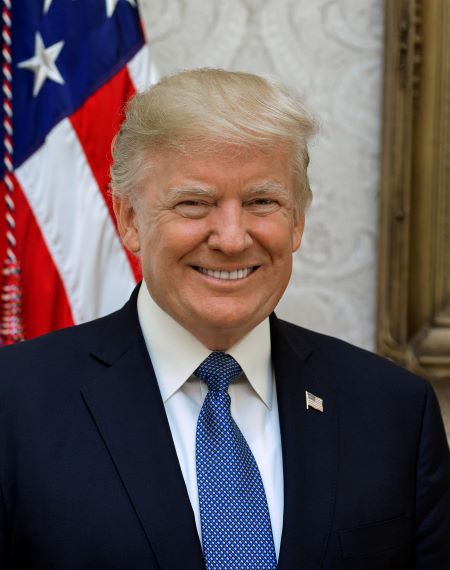
And so, when Donald Trump became the president in 2016 and the House of Representatives gained a Democrat majority in 2018, the stage was set. Trump was, and still is, a wildly hated figure in certain parts of the Democrat party, and a few House candidates had already stated in early 2018 they would move to impeach Trump if they were elected, and then the Democrats achieved a majority. Getting Trump was an overriding party goal, and so by December of 2019, the House passed Articles of Impeachment for abuse of power and obstruction of congress.
These charges all came about as the result of Trump’s statements and comments to many people where he brought up allegations that Joe Biden, his likely opponent in the upcoming 2020 election, may have used his power when he was Vice President, in a corrupt manner. What Trump said to whom, and what the consequences of Trump’s quest to expose Biden, as well as the reality of Biden’s influence peddling, is complex, and controversial. But, whatever the context of his inquires, it was enough to get the Democrat dominated House to act, and the impeachment articles were drafted and passed on a purely party line vote. The subsequent trial in the Senate, which occurred in January of 2020, less than a year from the 2020 vote where Trump was to be on the ballot, resulted in another party line vote, which kept Trump in office.
In about a month after that acquittal, the US was consumed by Covid, and in May of 2020, a national panic ensued over the death of a drug addict in Minneapolis named George Floyd under the knee of a white police officer. The circumstances which would lead to the second Articles of Impeachment were set. The first impeachment took 79 years to happen, the second 131 years to reoccur, and then it was only 21 years before it happen again, and then, it was repeated after just 13 months.
I have no desire to write much about the second impeachment of Donald Trump because of the sheer unmitigated foolishness of it all. Trump had already lost the 2020 election and therefore, was going to be out of office anyway, and so the impeachment and Senate trial was a farcical theater of politics so awful as to warrant little attention and no discernible positive outcome. The Articles of Impeachment state ‘incitement to insurrection’ as the cause and they were passed on a mostly party line vote. The ‘insurrection’ was referring to the riot that occurred at the Capital on January 6, 2021 which resulted in nothing harmful to Congress, and for which Trump was neither present nor had any plan for the aftermath. If he had done anything criminal, he was available for prosecution, but that would have involved standard rules of evidence and the House Democrats didn’t want to go down that road, so they rushed through a completely meaningless impeachment. The trial in the Senate was held in February after Trump was out of office and resulted in acquittal by a vote of 57 for and 43 against. It was as sorry a spectacle as the riot itself and will be recorded in history as such.
The Impeachable Future
And so, the impeachment tally stands at four actual impeachments, and one that was pending and resulted in the resignation of the president. If we count that resignation as a sort of de facto impeachment, then there have been five impeachments, including one against a president who had already left office.
Which gets to the point of impeachment; it is an inherently political act, and it should be rare. For the government to function, the party that loses an election has to accept the results and look to the next election as the way to remove a hated politician from office. Every House leader who filed an impeachment would offer their reasons for impeachment, but none of the impeachments on record are absolutely perfect, back to the first. Johnson was impeached over the Tenures in Office Act in 1868 but that very act was struck down as unconstitutional in 1887. Every accusation since then had been muddied by clearly political charges such as ‘obstruction of justice’ or ‘abuse of power.’
Most tellingly, impeachments are becoming more frequent, which is an ominous sign. In so many ways, the country is going backwards politically, and the frequency of impeachment is merely another sign of decay. Normalizing impeachment by impeaching Trump twice is a harbinger of future disaster. These two impeachments were directed by a Democrat from California, Nancy Pelosi, and she seems to abhor waiting for elections to get what she wants. She must be unconcerned that a government consumed with legally seeking the destruction of whomever is in the presidency will further erode the government’s ability to do important things, like govern effectively, and she must be unconcerned that the Republicans will use the normalized impeachment proceedings as well when they get the chance. The country conducts elections every four years and this event allows the voters to turn out a candidate they want removed, which is why it is critical for the press to keep the public informed with facts, and for the votes to be accurate and secure. And yet, our institutions are failing on those accounts too. The press is not in any sense a non-partisan player, and our elections are preposterously insecure. Covid precautions made elections subject to unvalidated mail-in ballots for which the invitation to cheat is open ended. Covid election deviations were much of Trump’s assertion that the 2020 results were not accurate. Those deviations were real.
Our impeachment mania is madness, and even if Joe Biden is guilty of what all evidence his drug addled son has provided points to, which was using his power as the Vice President to make money, impeaching him will further normalize the partisan warfare at the top, which runs the risk of driving the breakup of the country. But the GOP controls the House of Representatives now, and so the hearing has begun.
Impeachment should be rare, and only for probable and serious failures. It has never sent a president packing, and hopefully, will never be truly required. But we’d better sober up and demand better of our elected officials, or we’ll find impeachment a regular part of our politics, and there will be no Profiles in Courage to be had anywhere in the government.
The entire Profiles in Courage series can be seen here.


 TomRoushOnline