Israel is a country unique in many ways, and it’s founding in 1948 turned the wheel is Jewish history yet again. Just how biologically related today’s Israeli citizens are to the ancient Israelites is difficult to ascertain, but the presence of Jews in Judea and Israel is confirmed in the ancient writings of the Bible and in the many documents left behind by the Romans, the Greeks, the Persians, the Babylonians, and in archaeology carried forth by many nations. As I noted here, the Jews have been in the same land, speaking the same language, and worshiping the same God for 3000 years.
And yet, there are legions of violent and angry people who even now declare the Jews to be “settler colonists,” or worse, yet “white settler colonists” who must be turned out, “by any means necessary,” until the same land, often referred to as Palestine, is “free from the river to the sea.” This rabble was energized by the attacks in Israel on October 7, 2023, that resulted in the death of so many of these “white settler colonists” even though those out waving flags are “colonizing” the countries they immigrated to. So many of these “immigrants” have no intention to assimilating into the host country’s culture.
These many contradictions beg the question, what is an immigrant, what is a settler, and what is a colonist? Over time, we’ve assigned positive and negative connotations to these words, when they each describe the most basic human impulse which is to move from one area to another.
Turning to the dictionary, we find that:
An immigrant is: “a person who comes to a country to take up permanent residence.”
A settler is someone who: “settles in a new region or colony.”
A colonist is a person who: “migrates to and settles in a foreign area as part of a colony.”
And, a native is: “belonging to a particular place by birth.”
Quite obviously, there is a significant overlap in the meaning of these words.
Any reading of human history begins with the story of small bands or tribes of humans migrating from one area to another, seeking greater resources and safety. If the area these ‘immigrants’ entered was already host to another band of humans, there would be warfare. Someone would win, and someone would lose. The winners would settle in, and if they were agents of a power source elsewhere, they were, by default, a colony.
This phenomenon of one group displacing another is ubiquitous around the world. It happened deep in the past as the humans roamed out of Africa and displaced the previous immigrants who were the Neanderthals. Later it happened in Europe as the Celts, the Gaels, the Gauls, and others formed and fought. The Romans created a civilization that was constantly under assault by the Huns, the Goths, the Vandals, and the successor Franks. The Mongols fought other tribes across Asia. Migrants fought for lands in the Americas, and great cities were built on the ruins of the previous inhabitants who, if they lost, were enslaved. Immigration, conquest, rise, and then fall, has been the most fundamental feature of every brand of human history since the very beginning. If any of this is bad, we’re all guilty.
At a certain point the tribal wars began to give way to complex societies that were built on agriculture and cultural rules, and this marked the arrival of the great cities such as Jerusalem in 3500 BC. The areas under control of a single dominant tribe might then accept, without war, the arrival of new people, or these new arrivals might be marched in as the result of conquest. Over time, these new people would merge with the existing population, and form an even larger group of dominant people. The documentation of early antiquity captures these situations as they happened over and over. The merging of disparate people occurred in Egypt under the Pharaohs, in the Roman world as the Roman area incorporated new territories, in Mesoamerica under the Aztecs, and in China, and in what is now Israel.
A major change began in the late Middle Ages when the Europeans states invented ships that could travel great distances. Up to this point, people had been carrying on global commerce over land, and there was a tremendous incentive to trade with people far away. Land routes were slow and uncertain, but they had made the people of Europe and Asia aware of each other, and both sides of these worlds had developed shipping routes in the past. The Europeans developed the first truly deep-water ships and began to sail south, hugging the coast of Africa until they made it around the bottom of the continent and reached India. They brought with them three things that changed the face of the earth. They brough weapons that no one could defeat. They brought goods that were popular for trading. And, when they crossed the Atlantic, they brought old world pathogens that were deadly to the existing populations.
This period, beginning around 1500, set humans on the path that has recently ended and set us on the path we’re currently on. The European powers developed the largest and most powerful colonial empires in the modern era and what we currently call a colony comes from this period. The Spanish took all of Mesoamerica and expanded from there until they crested on the Philippines, which is an island chain in the Pacific named for a Habsburg monarch. The British, also a seagoing people, took North America and later, wrapped around Africa and built colonial holdings in the Far East. None had a bigger colonial empire than the British.
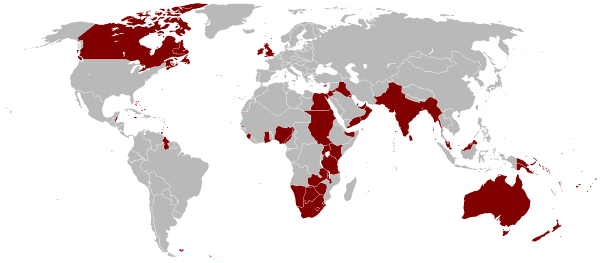
Were these colonies exclusively exploitative and undesirable? Were they built, as is said now, on the subjugation of the natives? It depends on who you ask, but the outcomes are clear enough to behold, and they were not all bad. The largest and most advanced economies of the world are the former British colonies, which include the United States, Canada, Australia, New Zealand, and India.
Were these colonizers universally unwelcome? Again, not always, as the many tribes that had been exploited by the dominant Aztecs in current day Mexico demonstrate. The Spanish allied with these many resentful tribes to defeat the dominate tribe, and then they, in turn, merged with the native culture to form the Mexico of today. The official ethnic identity of Mexico is the ‘mestizo,’ or mixed person, and we do not declare them an abomination. The Spanish invasion of Mexico was the catalyst for the creation of the Mexican state, identity, and ethnicity. Would the world be better off with a ‘pure’ Mexico, a pre-Spanish Mexico?
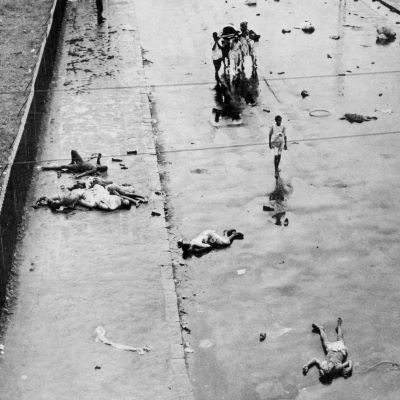
The British, it should be noted, ruled India as a colony with a tiny garrison, which would have been impossible but for the cooperation of the native Indians. The British brought an order to the Indian subcontinent it had not previously known, and historian Paul Johnson has speculated that India today would be as full of implacable hatred as the Middle East but for the century of British rule. When the British left in 1947, the Indian partition resulted in the death of millions of Hindus and Muslims. It wasn’t colonialization that initiated the horrendous bloodletting; it was decolonialization.
These colonies and empires allowed and encouraged far greater immigration across their domains, which explains many of the population patterns of today. This is presumed by most to be a good thing, and yet the question remains regarding the immigrant’s ability to ever become a native, particularly if the immigrant was a colonizer, or came from Europe at all.
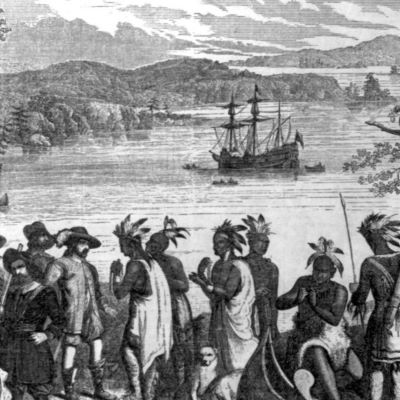
My family history is a case in point. I do not consider myself an immigrant since I was native born to this land and my family has been here for a quarter of a millennia. The first Roush (then spelled Rausch) that came here in 1740 was an immigrant from Heidelberg, well before there was a Germany or a United Station. Heidelberg was not part of the British Empire, but the Brits allowed immigrants to enter their colonies. So, is my family history one of immigration, settlement, or colonization? We’ve lived here, fought for the country, and built homes, churches, and businesses.
As far as I am concerned, we were immigrants, and then we’ve became the natives, just like the natives who were here before us. This process of transferring immigrants from one domain and making them the natives of another occurred across the British Empire, the Spanish Empire, and has occurred in reverse over the past 200 years as millions of people from the former colonies have moved to the host countries. Colonies produced new immigrants who settled and became new natives, often in cooperation with (as with my family) or as a replacement for (as was the case with the Atlantic slave trade) the displaced people.
The native Americans had been fighting and displacing each other for the millennia previous to European arrival, and the process continues to this day. It will always carry on because that’s what people do. I refuse to feel guilty or suppress my pride in what my family and countrymen have achieved on this continent just because there were others here before. The “white settler colonists” from Europe integrated with the natives in some instances, adapted to their ways in others, and warred with them in yet other circumstances.
Our current hypocrisy is on display daily now. On the one hand, the United States is said to be a “nation of immigrants” which would mean that the current residents, who once were immigrants, should not resent or seek to inhibit the entrance of new immigrants. Immigration is good. On the other hand, the old immigrants of the United States are said to be ‘white settlers’ who moved to a colony, and therefore, displaced the indigenous. And so, immigration is bad. At no point can the old immigrants ever achieve the status of indigenous, and the new immigrants can’t be settlers or colonists since they didn’t come from Europe. So, if you are native born to the United States, but your ancestors came from Europe, you are a ‘white settler colonist,’ no matter how many generations have passed, and you are generationally guilty of displacing the indigenous natives. New immigrants, however, even if they displace the current white settler colonists in neighborhoods that were formerly Italian, or Jewish, or black, can never be settler colonists, even if they settle and create little colonies of Puerto Ricans and Vietnamese.
This level of cognitive dissonance is a feature of the age of stupidity in which we live. It should be recognized for what it is, which is warfare, by other means. The goal is to delegitimize and discourage the current occupants of both Israel and the United States so the existing population can be displaced, discarded, or simply killed. The survivors will be the ones who see this for what it is and fight back. We’d better get clear on this or we will be “extinct.”
 TomRoushOnline